Thursday, August 23, 2007

Sexually Transmitted Diseases- STDs

Sexually transmitted diseases (STDs) are among the most common infectious diseases in the United States today. More than 20 different STDs have been identified, and 13 million men and women are infected each year in the United States. Depending on the disease, the infection can be spread through any type of sexual activity involving the sex organs or the mouth; the infection can also be spread through contact with blood during sexual activity.Depending on the disease, STDs can be spread with any type of sexual activity. STDs are most often caused by viruses and bacteria.Common STDs have a variety of symptoms (if symptoms develop at all) and many different complications, including death.
  • Most common of all STDs caused by bacteria

  • No symptoms in 80% of women and 50% of men

  • Discharge from the vagina or the penis, burning or pain during urination

  • Transmitted through vaginal, oral, or anal sexual contact

  • Ectopic pregnancy and infertility for women most serious complications

  • Treatable with antibiotics

  • Genital herpes: One type of herpes typically causes cold sores in the mouth, and another type causes genital sores; however, each type can cause either type of infection.

    • Recurring outbreaks of blisterlike sores on the genitals

    • Can be transmitted from a mother to her baby during birth

    • Reduction in frequency and severity of blister outbreaks with treatment but not complete elimination of infection.

  • Hepatitis (A, B, C, D)

    • Hepatitis B most often associated with sexual contact

    • Yellowish skin and eyes, fever, achy, tired, might feel like the flu

    • Severe complications, including cirrhosis and liver cancer

    • No cure available, remission possible with some aggressive medications

    • Immunizations available to prevent hepatitis A and B
  • Gonorrhea

    • Discharge from the vagina or the penis

    • Painful urination

    • Ectopic pregnancy and infertility for women most serious complications

    • Treatable with antibiotics
  • Syphilis

    • Mild symptoms, often goes undetected initially

    • Starts with painless genital ulcer that goes away on its own

    • Rash, fever, headache, achy joints

    • Treatable with antibiotics

    • More serious complications associated with later stages of disease if undetected and untreated
  • Chancroid

    • Not common in the United States

    • Causes painful ulcers on the genitals

    • Can be confused with syphilis or herpes

    • Treatable with antibiotics
  • HIV/AIDS

    • Spread primarily by sexual contact and from sharing IV needles

    • Can be transmitted at the time a person becomes infected with other STDs

    • Fatigue, night sweats, chills or fever lasting several weeks, headaches, cough

    • No current cure and generally fatal, with death usually occurring after 2-3 years; medication available to slow disease progression
  • Genital warts

    • Caused by a virus related to skin warts

    • Small, painless bumps in the genital or anal areas (sometimes in clusters that look like cauliflower)

    • Various treatments available (for example, freezing or painting the warts with medication)
  • Pubic lice

    • Very tiny insects living in pubic hair

    • Can be picked up from clothing or bedding

    • First notice itching in the pubic area

    • Treatable with creams, anti-lice agents, and combing
  • Scabies

    • Skin infection caused by a tiny mite

    • Highly contagious

    • Spread primarily by sexual contact or from contact with skin, infested sheets, towels, or furniture

    • Treatment with creams

Tuesday, August 21, 2007

Parkinson's disease Treatment and Medicines

Parkinson's disease is a chronic disorder that requires broad-based management including patient and family education, support group services, general wellness maintenance, exercise, and nutrition. At present, there is no cure for PD, but medications or surgery can provide relief from the symptoms.

Levodopa

Stalevo for treatment of Parkinson's disease

The most widely used form of treatment is L-dopa in various forms. L-dopa is transformed into dopamine in the dopaminergic neurons by L-aromatic amino acid decarboxylase (often known by its former name dopa-decarboxylase). However, only 1-5% of L-DOPA enters the dopaminergic neurons. The remaining L-DOPA is often metabolised to dopamine elsewhere, causing a wide variety of side effects. Due to feedback inhibition, L-dopa results in a reduction in the endogenous formation of L-dopa, and so eventually becomes counterproductive.

Carbidopa and benserazide are dopa decarboxylase inhibitors. They help to prevent the metabolism of L-dopa before it reaches the dopaminergic neurons and are generally given as combination preparations of carbidopa/levodopa (co-careldopa) (e.g. Sinemet, Parcopa) and benserazide/levodopa (co-beneldopa) (e.g. Madopar). There are also controlled release versions of Sinemet and Madopar that spread out the effect of the L-dopa. Duodopa is a combination of levodopa and carbidopa, dispersed as a viscous gel. Using a patient-operated portable pump, the drug is continuously delivered via a tube directly into the upper small intestine, where it is rapidly absorbed.

Tolcapone inhibits the COMT enzyme, thereby prolonging the effects of L-dopa, and so has been used to complement L-dopa. However, due to its possible side effects such as liver failure, it's limited in its availability.

A similar drug, entacapone, has similar efficacy and has not been shown to cause significant alterations of liver function. A recent follow-up study by Cilia and colleagueslooked at the clinical effects of long-term administration of entacapone, on motor performance and pharmacological compensation, in advanced PD patients with motor fluctuations: 47 patients with advanced PD and motor fluctuations were followed for six years from the first prescription of entacapone and showed a stabilization of motor conditions, reflecting entacapone can maintain adequate inhibition of COMT over time.

Dopamine agonists

The dopamine-agonists bromocriptine, pergolide, pramipexole, ropinirole , cabergoline, apomorphine, and lisuride, are moderately effective. These have their own side effects including those listed above in addition to somnolence, hallucinations and /or insomnia. Several forms of dopamine agonism have been linked with a markedly increased risk of problem gambling. Dopamine agonists initially act by stimulating some of the dopamine receptors. However, they cause the dopamine receptors to become progressively less sensitive, thereby eventually increasing the symptoms.

Dopamine agonists can be useful for patients experiencing on-off fluctuations and dyskinesias as a result of high doses of L-dopa. Apomorphine can be administered via subcutaneous injection using a small pump which is carried by the patient. A low dose is automatically administered throughout the day, reducing the fluctuations of motor symptoms by providing a steady dose of dopaminergic stimulation. After an initial "apomorphine challenge" in hospital to test its effectiveness and brief patient and caregiver, the primary caregiver (often a spouse or partner) takes over maintenance of the pump. The injection site must be changed daily and rotated around the body to avoid the formation of nodules. Apomorphine is also available in a more acute dose as an autoinjector pen for emergency doses such as after a fall or first thing in the morning.

MAO-B inhibitors

Selegiline and rasagiline reduce the symptoms by inhibiting monoamine oxidase-B (MAO-B), which inhibits the breakdown of dopamine secreted by the dopaminergic neurons. Metabolites of selegiline include L-amphetamine and L-methamphetamine (not to be confused with the more notorious and potent dextrorotary isomers). This might result in side effects such as insomnia. Use of L-dopa in conjunction with selegiline has increased mortality rates that have not been effectively explained. Another side effect of the combination can be stomatitis. One report raised concern about increased mortality when MAO-B inhibitors were combined with L-dopa; however subsequent studies have not confirmed this finding. Unlike other non selective monoamine oxidase inhibitors, tyramine-containing foods do not cause a hypertensive crisis.

Speech therapies

The most widely practiced treatment for the speech disorders associated with Parkinson's disease is Lee Silverman Voice Treatment (LSVT). LSVT focuses on increasing vocal loudness.

A study found that an electronic device providing frequency-shifted auditory feedback (FAF) improved the clarity of Parkinson's patients' speech.

Physical exercise

Regular physical exercise and/or therapy, including in forms such as yoga, tai chi, and dance can be beneficial to the patient for maintaining and improving mobility, flexibility, balance and a range of motion. Physicians and physical therapists often recommend basic exercises, such as bringing the toes up with every step, carrying a bag with weight to decrease the bend having on one side, and practicing chewing hard and move the food around the mouth.

Surgery and deep brain stimulation
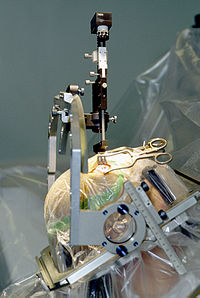
Illustration showing an electrode placed deep seated in the brain

Treating Parkinson's disease with surgery was once a common practice, but after the discovery of levodopa, surgery was restricted to only a few cases. Studies in the past few decades have led to great improvements in surgical techniques, and surgery is again being used in people with advanced PD for whom drug therapy is no longer sufficient.

Deep brain stimulation is presently the most used surgical means of treatment, but other surgical therapies that have shown promise include surgical lesion of the subthalamic nucleus and of the internal segment of the globus pallidus, a procedure known as pallidotomy.

Methods undergoing evaluation

Gene therapy

Currently under investigation is gene therapy. This involves using a harmless virus to shuttle a gene into a part of the brain called the subthalamic nucleus (STN). The gene used leads to the production of an enzyme called glutamic acid decarboxylase (GAD), which catalyses the production of a neurotransmitter called GABA. GABA acts as a direct inhibitor on the overactive cells in the STN.

GDNF infusion involves the infusion of GDNF (glial-derived neurotrophic factor) into the basal ganglia using surgically implanted catheters. Via a series of biochemical reactions, GDNF stimulates the formation of L-dopa. GDNF therapy is still in development.

Implantation of stem cells genetically engineered to produce dopamine or stem cells that transform into dopamine-producing cells has already started being used. These could not constitute cures because they do not address the considerable loss of activity of the dopaminergic neurons. Initial results have been unsatifactory, with patients still retaining their drugs and symptoms.

Neuroprotective treatments

Neuroprotective treatments are at the forefront of PD research, but are still under clinical scrutiny. These agents could protect neurons from cell death induced by disease presence resulting in a slower pregression of disease. Agents currently under investigation as neuroprotective agents include apoptotic drugs (CEP 1347 and CTCT346), lazaroids, bioenergetics, antiglutamatergic agents and dopamine receptors. Clinically evaluated neuroprotective agents are the monoamine oxidase inhibitors selegiline and rasagiline, dopamine agonists, and the complex I mitochondrial fortifier coenzyme Q10.

Neural transplantation

The first prospective randomised double-blind sham-placebo controlled trial of dopamine-producing cell transplants failed to show an improvement in quality of life although some significant clinical improvements were seen in patients below the age of 60. A significant problem was the excess release of dopamine by the transplanted tissue, leading to dystonias. Research in African green monkeys suggests that the use of stem cells might in future provide a similar benefit without inducing dystonias.

Nutrients

Nutrients have been used in clinical studies and are widely used by people with Parkinson's disease in order to partially treat PD or slow down its deterioration. The L-dopa precursor L-tyrosine was shown to relieve an average of 70% of symptoms. Ferrous iron, the essential cofactor for L-dopa biosynthesis was shown to relieve between 10% and 60% of symptoms in 110 out of 110 patients.

More limited efficacy has been obtained with the use of THFA, NADH, and pyridoxine—coenzymes and coenzyme precursors involved in dopamine biosynthesis. Vitamin C and vitamin E in large doses are commonly used by patients in order to theoretically lessen the cell damage that occurs in Parkinson's disease. This is because the enzymes superoxide dismutase and catalase require these vitamins in order to nullify the superoxide anion, a toxin commonly produced in damaged cells. However, in the randomized controlled trial, DATATOP of patients with early PD, no beneficial effect for vitamin E compared to placebo was seen.

Qigong

There have been two studies looking at qigong in Parkinson's disease. In a trial in Bonn, an open-label randomised pilot study in 56 patients found an improvement in motor and non-motor symptoms amongst patients who had undergone one hour of structured Qigong exercise per week in two 8-week blocks. The authors speculate that visualizing the flow of "energy" might act as an internal cue and so help improve movement.

The second study, however, found Qigong to be ineffective in treating Parkinson's disease. In that study, researchers used a randomized cross-over trial to compare aerobic training with Qigong in advanced Parkinson's disease. Two groups of PD patients were assessed, had 20 sessions of either aerobic exercise or qigong, were assessed again, then after a 2 month gap were switched over for another 20 sessions, and finally assessed again. The authors found an improvement in motor ability and cardiorespiratory function following aerobic exercise, but found no benefit following Qigong. The authors also point out that aerobic exercise had no benefit for patients' quality of life.

Botox

Recently, Botox injections are being investigated as a non-FDA approved possible experimental treatment.[citation needed]

Causes of Parkinson's disease

Most people with Parkinson's disease are described as having idiopathic Parkinson's disease (having no specific cause). There are far less common causes of Parkinson's disease including genetic, toxins, head trauma, and drug-induced Parkinson's disease.

Genetic

In recent years, a number of specific genetic mutations causing Parkinson's disease have been discovered, including in certain populations (Contursi, Italy). These account for a small minority of cases of Parkinson's disease. Somebody who has Parkinson's disease is more likely to have relatives that also have Parkinson's disease. However, this does not mean that the disorder has been passed on genetically.

Toxins

One theory holds that the disease may result in many or even most cases from the combination of a genetically determined vulnerability to environmental toxins along with exposure to those toxins. This hypothesis is consistent with the fact that Parkinson's disease is not distributed homogeneously throughout the population: rather, its incidence varies geographically. It would appear that incidence varies by time as well, for although the later stages of untreated PD are distinct and readily recognizable, the disease was not remarked upon until the beginnings of the Industrial Revolution, and not long thereafter become a common observation in clinical practice. The toxins most strongly suspected at present are certain pesticides and transition-series metals such as manganese or iron, especially those that generate reactive oxygen species, and or bind to neuromelanin, as originally suggested by G.C. Cotzias. In the Cancer Prevention Study II Nutrition Cohort, a longitudinal investigation, individuals who were exposed to pesticides had a 70% higher incidence of PD than individuals who were not exposed.

MPTP is used as a model for Parkinson's as it can rapidly induce parkinsonian symptoms in human beings and other animals, of any age. MPTP was notorious for a string of Parkinson's disease cases in California in 1982 when it contaminated the illicit production of the synthetic opiate MPPP. Its toxicity likely comes from generation of reactive oxygen species through tyrosine hydroxylation.

Other toxin-based models employ PCBs, paraquat (a herbicide) in combination with maneb (a fungicide) rotenone (an insecticide), and specific organochlorine pesticides including dieldrin and lindane.Numerous studies have found an increase in PD in persons who consume rural well water; researchers theorize that water consumption is a proxy measure of pesticide exposure. In agreement with this hypothesis are studies which have found a dose-dependent an increase in PD in persons exposed to agricultural chemicals.

Head trauma

Past episodes of head trauma are reported more frequently by sufferers than by others in the population. A methodologically strong recent study found that those who have experienced a head injury are four times more likely to develop Parkinson’s disease than those who have never suffered a head injury. The risk of developing Parkinson’s increases eightfold for patients who have had head trauma requiring hospitalization, and it increases 11-fold for patients who have experienced severe head injury. The authors comment that since head trauma is a rare event, the contribution to PD incidence is slight. They express further concern that their results may be biased by recall, i.e., the PD patients because they reflect upon the causes of their illness, may remember head trauma better than the non-ill control subjects. These limitations were overcome recently by Tanner and colleagues, who found a similar risk of 3.8, with increasing risk associated with more severe injury and hospitalization.

Parkinson's Diagnosis

There are currently no blood or laboratory tests that have been proven to help in diagnosing PD. Therefore the diagnosis is based on medical history and a neurological examination. The disease can be difficult to diagnose accurately. The Unified Parkinson's Disease Rating Scale is the primary clinical tool used to assist in diagnosis and determine severity of PD. Indeed, only 75% of clinical diagnoses of PD are confirmed at autopsy.[13] Early signs and symptoms of PD may sometimes be dismissed as the effects of normal aging. The physician may need to observe the person for some time until it is apparent that the symptoms are consistently present. Usually doctors look for shuffling of feet and lack of swing in the arms. Doctors may sometimes request brain scans or laboratory tests in order to rule out other diseases. However, CT and MRI brain scans of people with PD usually appear normal.

Parkinson's Symptoms

Parkinson disease affects movement (motor symptoms). Typical other symptoms include disorders of mood, behavior, thinking, and sensation (non-motor symptoms). Individual patients' symptoms may be quite dissimilar and progression of the disease is also distinctly individual.

Motor symptoms

The cardinal symptoms are:

  • tremor: normally 4-7 Hz tremor, maximal when the limb is at rest, and decreased with voluntary movement. It is typically unilateral at onset. This is the most apparent and well-known symptom, though an estimated 30% of patients have little perceptible tremor; these are classified as akinetic-rigid.
  • rigidity: stiffness; increased muscle tone. In combination with a resting tremor, this produces a ratchety, "cogwheel" rigidity when the limb is passively moved.
  • bradykinesia/akinesia: respectively, slowness or absence of movement. Rapid, repetitive movements produce a dysrhythmic and decremental loss of amplitude. Also "dysdiadokinesia", which is the loss of ability to perform rapid alternating movements
  • postural instability: failure of postural reflexes, which leads to impaired balance and falls.

Other motor symptoms include:

  • Gait and posture disturbances:
    • Shuffling: gait is characterized by short steps, with feet barely leaving the ground, producing an audible shuffling noise. Small obstacles tend to trip the patient
    • Decreased arm swing: a form of bradykinesia
    • Turning "en bloc": rather than the usual twisting of the neck and trunk and pivoting on the toes, PD patients keep their neck and trunk rigid, requiring multiple small steps to accomplish a turn.
    • Stooped, forward-flexed posture. In severe forms, the head and upper shoulders may be bent at a right angle relative to the trunk (camptocormia) [5].
    • Festination: a combination of stooped posture, imbalance, and short steps. It leads to a gait that gets progressively faster and faster, often ending in a fall.
    • Gait freezing: "freezing" is another word for akinesia, the inability to move. Gait freezing is characterized by inability to move the feet, especially in tight, cluttered spaces or when initiating gait.
    • Dystonia (in about 20% of cases): abnormal, sustained, painful twisting muscle contractions, usually affecting the foot and ankle, characterized by toe flexion and foot inversion, interfering with gait. However, dystonia can be quite generalized, involving a majority of skeletal muscles; such episodes are acutely painful and completely disabling.
  • Speech and swallowing disturbances
    • Hypophonia: soft speech. Speech quality tends to be soft, hoarse, and monotonous. Some people with Parkinson's disease claim that their tongue is "heavy" or have cluttered speech.[6].
    • Festinating speech: excessively rapid, soft, poorly-intelligible speech.
    • Drooling: most likely caused by a weak, infrequent swallow and stooped posture.
    • Non-motor causes of speech/language disturbance in both expressive and receptive language: these include decreased verbal fluency and cognitive disturbance especially related to comprehension of emotional content of speech and of facial expression[7]
    • Dysphagia: impaired ability to swallow. Can lead to aspiration, pneumonia.
  • Other motor symptoms:
    • fatigue (up to 50% of cases);
    • masked faces (a mask-like face also known as hypomimia), with infrequent blinking;[8]
    • difficulty rolling in bed or rising from a seated position;
    • micrographia (small, cramped handwriting);
    • impaired fine motor dexterity and motor coordination;
    • impaired gross motor coordination;
    • Poverty of movement: overall loss of accessory movements, such as decreased arm swing when walking, as well as spontaneous movement.

Non-motor symptoms

Mood disturbances

  • Estimated prevalence rates of depression vary widely according to the population sampled and methodology used. Reviews of depression estimate its occurrence in anywhere from 20-80% of cases.[9] Estimates from community samples tend to find lower rates than from specialist centres. Most studies use self-report questionnaires such as the Beck Depression Inventory, which may overinflate scores due to physical symptoms. Studies using diagnostic interviews by trained psychiatrists also report lower rates of depression.
  • More generally, there is an increased risk for any individual with depression to go on to develop Parkinson's disease at a later date.[10]
  • 70% of individuals with Parkinson's disease diagnosed with pre-existing depression go on to develop anxiety. 90% of Parkinson's disease patients with pre-existing anxiety subsequently develop depression; apathy or abulia.

Cognitive disturbances

  • slowed reaction time; both voluntary and involuntary motor responses are significantly slowed.
  • executive dysfunction, characterized by difficulties in: differential allocation of attention, impulse control, set shifting, prioritizing, evaluating the salience of ambient data, interpreting social cues, and subjective time awareness. This complex is present to some degree in most Parkinson's patients; it may progress to:
  • dementia: a later development in approximately 20-40% of all patients, typically starting with slowing of thought and progressing to difficulties with abstract thought, memory, and behavioral regulation. Hallucinations, delusions and paranoia may develop.
  • short term memory loss; procedural memory is more impaired than declarative memory. Prompting elicits improved recall.
  • medication effects: some of the above cognitive disturbances are improved by dopaminergic medications, while others are actually worsened.[11]

Sleep disturbances

  • Excessive daytime somnolence
  • Initial, intermediate, and terminal insomnia
  • Disturbances in REM sleep: disturbingly vivid dreams, and REM Sleep Disorder, characterized by acting out of dream content - can occur years prior to diagnosis

Sensation disturbances

  • impaired visual contrast sensitivity, spatial reasoning, colour discrimination, convergence insufficiency (characterized by double vision) and oculomotor control
  • dizziness and fainting; usually attributable orthostatic hypotension, a failure of the autonomous nervous system to adjust blood pressure in response to changes in body position
  • impaired proprioception (the awareness of bodily position in three-dimensional space)
  • reduction or loss of sense of smell (microsmia or anosmia) - can occur years prior to diagnosis,
  • pain: neuropathic, muscle, joints, and tendons, attributable to tension, dystonia, rigidity, joint stiffness, and injuries associated with attempts at accommodation

Autonomic disturbances

  • oily skin and seborrheic dermatitis[12]
  • urinary incontinence, typically in later disease progression
  • nocturia (getting up in the night to pass urine) - up to 60% of cases
  • constipation and gastric dysmotility that is severe enough to endanger comfort and even health
  • altered sexual function: characterized by profound impairment of sexual arousal, behavior, orgasm, and drive is found in mid and late Parkinson disease. Current data addresses male sexual function almost exclusively
  • weight loss, which is significant over a period of ten years - 8% of body weight lost compared with 1% in a control group.

Parkinson's disease

Parkinson's disease (also known as Parkinson disease or PD) is a degenerative disorder of the central nervous system that often impairs the sufferer's motor skills and speech.

Parkinson's disease belongs to a group of conditions called movement disorders. It is characterized by muscle rigidity, tremor, a slowing of physical movement (bradykinesia) and, in extreme cases, a loss of physical movement (akinesia). The primary symptoms are the results of decreased stimulation of the motor cortex by the basal ganglia, normally caused by the insufficient formation and action of dopamine, which is produced in the dopaminergic neurons of the brain. Secondary symptoms may include high level cognitive dysfunction and subtle language problems. PD is both chronic and progressive.

PD is the most common cause of parkinsonism, a group of similar symptoms. PD is also called "primary parkinsonism" or "idiopathic PD" (having no known cause). While most forms of parkinsonism are idiopathic, there are some cases where the symptoms may result from toxicity, drugs, genetic mutation, head trauma, or other medical disorders.

Sunday, August 19, 2007

Bone diseases- Bone disease treatment-Bone cancer images

Bone diseases are now a days not only a serious matter but also a serious matter. There are many kind of bone diseases are there. Many of bone diseases are not chronic. But some of them are very chronic. some bone diseases are life threatening. But most diseases are curable. Now a days people think that many dieases are not curable. Effective treatment are there near by you. Many bone disease are curable in days. People dont know the importants of many treatments. Bone disease can be affect any parts of body. Even it in ribs, wrist or knee nothing to worry. Even bone cancer also can be treated. There are many reasons for a bone disease.
1. Osteoporosis makes bone weak and easy to break

2. Osteogenesis inperfecta makes your bone brittle

3. Bone also causes cancer


Cancer that begins is the bone is called primary bone cancer. It is found most often in the arms and legs, but it can occur in any bone in the body. Children and young people are more likely than adults to have bone cancer.

Rare diseases and Medicines

A rare disease is usualy can be seen in very rare in population.Rare diseases are usually chronic and life-threatening. This is so because, given its rarity, less severe illness are just not identified as such. Eurordis estimates that at least 80% of them have identified genetic origins. Other rare diseases are the result of infections and allergies or due to degenerative and proliferative causes. Symptoms of some rare diseases may appear at birth or in childhood, whereas others only appear once adulthood is reached.

Monday, August 6, 2007

Aids Virus


Human immunodeficiency virus (HIV) is a retrovirus that can lead to acquired immunodeficiency syndrome (AIDS, a condition in humans in which the immune system begins to fail, leading to life-threatening opportunistic infections). Previous names for the virus include human

Infection with HIV occurs by the transfer of blood, semen, vaginal fluid, pre-ejaculate, or breast milk. Within these bodily fluids, HIV is present as both free virus particles and virus within infected immune cells. The four major routes of transmission are unprotected sexual intercourse, contaminated needles, and transmission from an infected mother to her baby at birth, or through breast milk. Screening of blood products for HIV in the developed world has largely eliminated transmission through blood transfusions or infected blood products in these countries.

HIV infection in humans is now pandemic. As of January 2006, the Joint United Nations Programme on HIV/AIDS (UNAIDS) and the World Health Organization (WHO) estimate that AIDS has killed more than 25 million people since it was first recognized on December 1, 1981, making it one of the most destructive pandemics in recorded history. In 2005 alone, AIDS claimed an estimated 2.4–3.3 million lives, of which more than 570,000 were children. It is estimated that about 0.6% of the world's living population is infected with HIV. A third of these deaths are occurring in sub-Saharan Africa, retarding economic growth and increasing poverty. According to current estimates, HIV is set to infect 90 million people in Africa, resulting in a minimum estimate of 18 million orphans. Antiretroviral treatment reduces both the mortality and the morbidity of HIV infection, but routine access to antiretroviral medication is not available in all countries.

HIV primarily infects vital cells in the human immune system such as helper T cells (specifically CD4+ T cells), macrophages and dendritic cells. HIV infection leads to low levels of CD4+ T cells through three main mechanisms: firstly, direct viral killing of infected cells; secondly, increased rates of apoptosis in infected cells; and thirdly, killing of infected CD4+ T cells by CD8 cytotoxic lymphocytes that recognize infected cells. When CD4+ T cell numbers decline below a critical level, cell-mediated immunity is lost, and the body becomes progressively more susceptible to opportunistic infections. If untreated, eventually most HIV-infected individuals develop AIDS (Acquired Immunodeficiency Syndrome) and die; however about one in ten remains healthy for many years, with no noticeable symptoms.Treatment with anti-retrovirals, where available, increases the life expectancy of people infected with HIV.